
Introduction
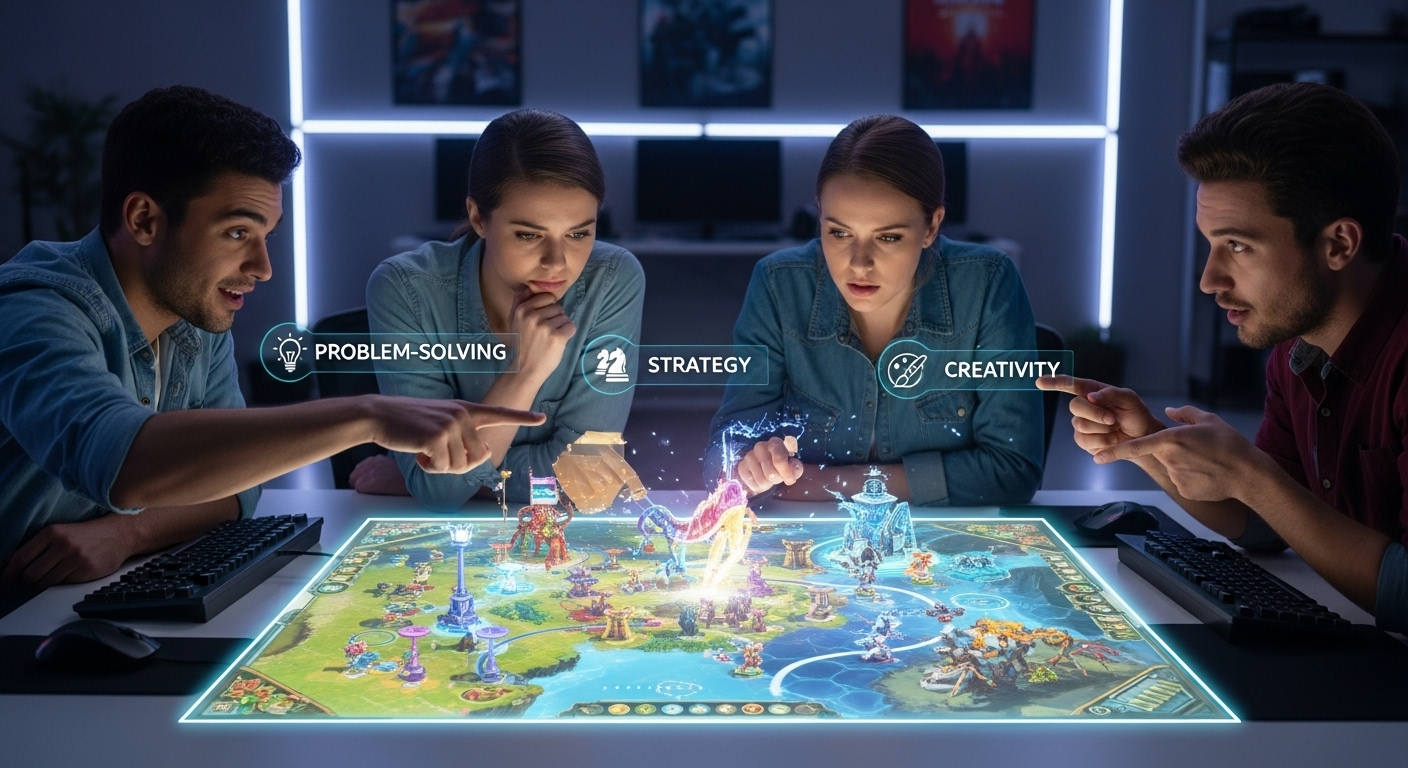
Gaming is often misunderstood as a distraction, but research shows it builds valuable skills. From problem-solving to teamwork, games can teach lessons that apply in real life. In this blog, we’ll explore how gaming enhances cognitive, social, and creative abilities.
Cognitive Skills
Problem-Solving
Puzzle games like Portal, The Witness, and Minecraft challenge players to think critically. Solving in-game challenges trains the brain to analyze problems and test solutions.
Strategic Thinking
Strategy games like StarCraft II, Civilization, and Age of Empires require players to plan long-term strategies, manage resources, and adapt to unexpected challenges.
Memory and Focus
Games often require remembering patterns, maps, or enemy behaviors. Studies show regular gaming can improve working memory and attention span.
Social Skills
Teamwork
Multiplayer games like League of Legends and Overwatch rely on teamwork. Players learn to communicate, share roles, and work toward common goals.
Leadership
Leading a raid in an MMORPG or commanding a team in competitive shooters teaches leadership, delegation, and decision-making.
Cultural Awareness
Online gaming connects people from different cultures and backgrounds, fostering understanding and collaboration.
Creativity
Building and Designing
Games like Minecraft and Roblox let players design structures, worlds, and even entire games. This builds creativity and problem-solving.
Storytelling
Role-playing games (RPGs) like Skyrim and The Witcher immerse players in narratives, inspiring storytelling and imagination.
Emotional Skills
Resilience
Games involve failure and retries. Players learn persistence, resilience, and how to handle setbacks constructively.
Stress Relief
Gaming can be an escape, reducing stress and improving mood when enjoyed in moderation.
Real-Life Applications
- Education: Teachers use games to make learning fun.
- Workplace: Skills from gaming translate into leadership, creativity, and problem-solving.
- Therapy: Games are used in mental health therapy to build focus and social skills.
Conclusion
Gaming is more than entertainment—it’s a tool for growth. By enhancing problem-solving, strategy, creativity, and resilience, gaming prepares players with skills valuable in real life. Far from a waste of time, gaming can shape smarter, more adaptable individuals.